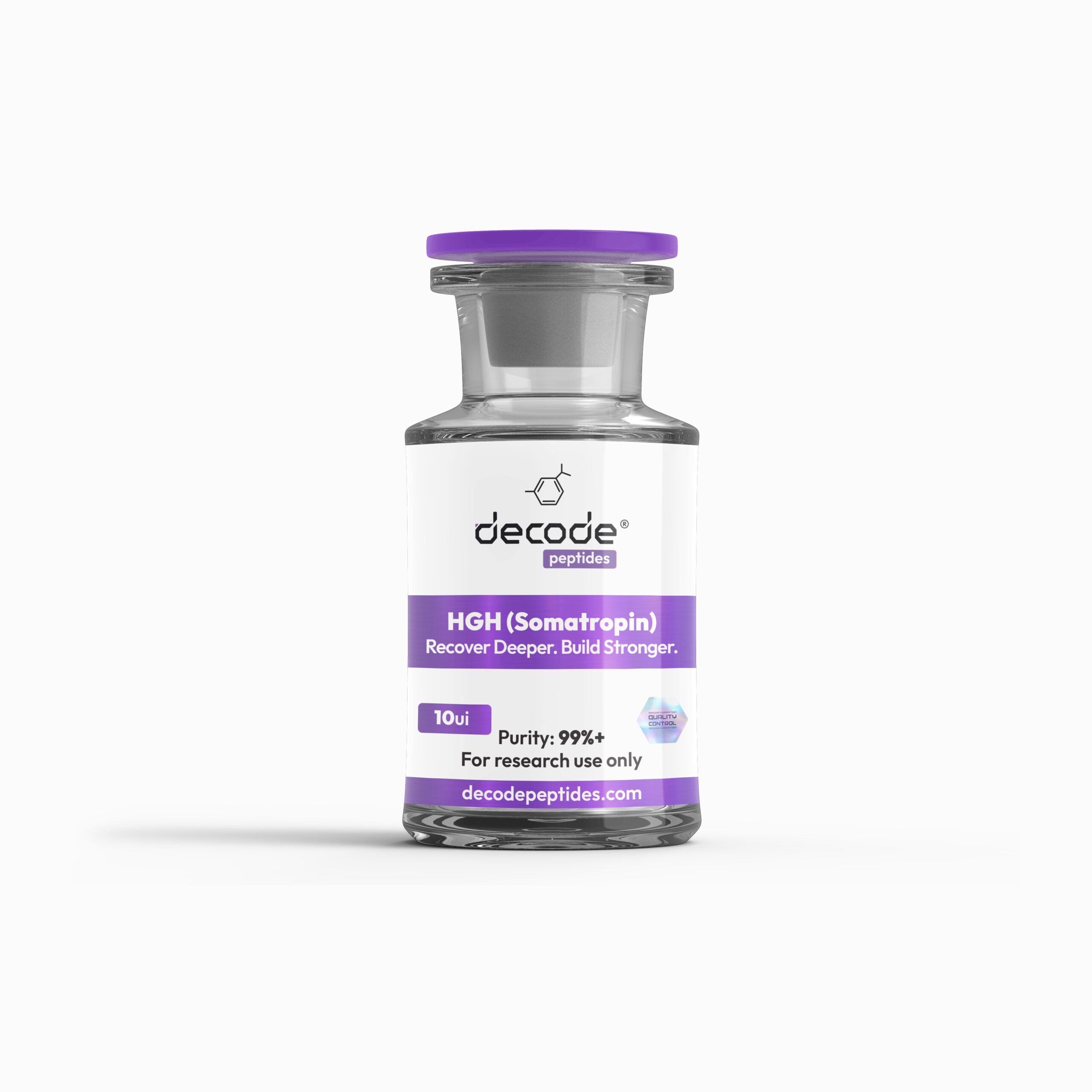
HGH Somatropin Kit — 10 lyophilized vials of recombinant human growth hormone (191 amino acids), 10 IU per vial for 100 IU total per kit. Produced via recombinant DNA technology, structurally identical to endogenous pituitary-derived growth hormone. Supplied for in-vitro and preclinical research applications.
Reconstitution requires bacteriostatic water (sold separately). Use the reconstitution calculator →
COA with every batch
Independent EU lab, ≥99% HPLC
Secure encrypted checkout
Card payments over TLS
Discreet packaging
Plain outer box, no branding
EU dispatch in 24–48h
Tracked delivery
Cold-chain handling
Temperature-controlled transit
About this compound
HGH Somatropin is the 191-amino-acid recombinant human growth hormone, structurally identical to pituitary-derived GH. FDA-approved since 1985, it acts via the GH receptor (GHR) to activate JAK2/STAT5b — driving hepatic IGF-1 production — as well as MAPK/ERK and PI3K/Akt pathways. Clinically and preclinically, it is the most studied peptide hormone for body composition, bone biology, wound healing, and metabolic regulation. The landmark 1990 Rudman study in the New England Journal of Medicine established HGH as the benchmark for anti-aging research protocols.
Research Data
Research Snapshot — HGH Somatropin
Key Mechanisms & Pathways
- JAK2 / STAT5b PathwayPrimary GHR signalling cascade; drives IGF-1 transcription in hepatocytes — the key anabolic mediator.
- MAPK / ERK PathwayRegulates cell proliferation and differentiation; mediates anti-apoptotic effects in muscle and liver.
- PI3K / Akt / mTORPromotes protein synthesis, glucose uptake and cell survival via the canonical anabolic kinase cascade.
- Direct LipolysisActivates hormone-sensitive lipase (HSL) in adipocytes, shifting energy substrate toward fatty acid oxidation.
- IGF-1 / IGFBP-3 InductionDrives hepatic production of IGF-1 and its binding protein — the primary downstream anabolic effectors.
- Osteoblast StimulationVia IGF-1, drives bone matrix synthesis and mineralisation — the mechanism behind GH-driven BMD increases.
Preclinical & Clinical Research Summary
| Research Area | Key Finding | Source |
|---|---|---|
| Body Composition | +5–10% lean mass, −10–20% fat mass after 6 months in GH-deficient adults. | Jorgensen JO et al., 1989 — Lancet |
| Bone Density | +4–8% BMD per year in GH-deficient adults via IGF-1-driven osteoblast stimulation. | Rosen T et al., 1997 — J Clin Endocrinol Metab |
| Wound Healing | Increased collagen synthesis by 50–100%; accelerated burn wound healing clinically. | Herndon DN et al., 1990 — Ann Surg |
| Age Reversal Markers | Rudman study: +8.8% lean mass, +1.6% BMD, +7.1% skin thickness in men over 60. | Rudman D et al., 1990 — N Engl J Med |
References
- Jorgensen JO et al. "Beneficial effects of growth hormone treatment in GH-deficient adults." Lancet, 1989;1(8649):1221–1225.
- Rudman D et al. "Effects of human growth hormone in men over 60 years old." N Engl J Med, 1990;323(1):1–6.
- Molitch ME et al. "Evaluation and treatment of adult growth hormone deficiency." J Clin Endocrinol Metab, 2011;96(6):1587–1609.
- Herndon DN et al. "Muscle protein catabolism after severe burn: effects of IGF-1/IGFBP-3 treatment." Ann Surg, 1999;229(5):713.
Specifications
- Sequence
- 191-amino-acid single chain (recombinant)
- Molecular Weight
- 22,124 Da
- Amino Acids
- 191
- Half-Life
- ~4 hours (SC)
- Vial Size
- 10 IU per vial
- Kit Size
- 10 vials per kit (100 IU total)
- Purity
- ≥99% (HPLC)
- Form
- Lyophilized powder
- Reconstitution
- Bacteriostatic water (0.9% benzyl alcohol)
- Storage
- Sealed: 2–8 °C · Reconstituted: 2–8 °C, use within 28 days
Research library
Full mechanism breakdowns and peer-reviewed references for this compound.
Researcher reviews
Frequently asked questions
Related research compounds
For laboratory and in-vitro research use only. Not for human or veterinary use, not for consumption. By purchasing, you confirm you are a qualified researcher and accept full responsibility for compliant handling and disposal. Read the full disclaimers.