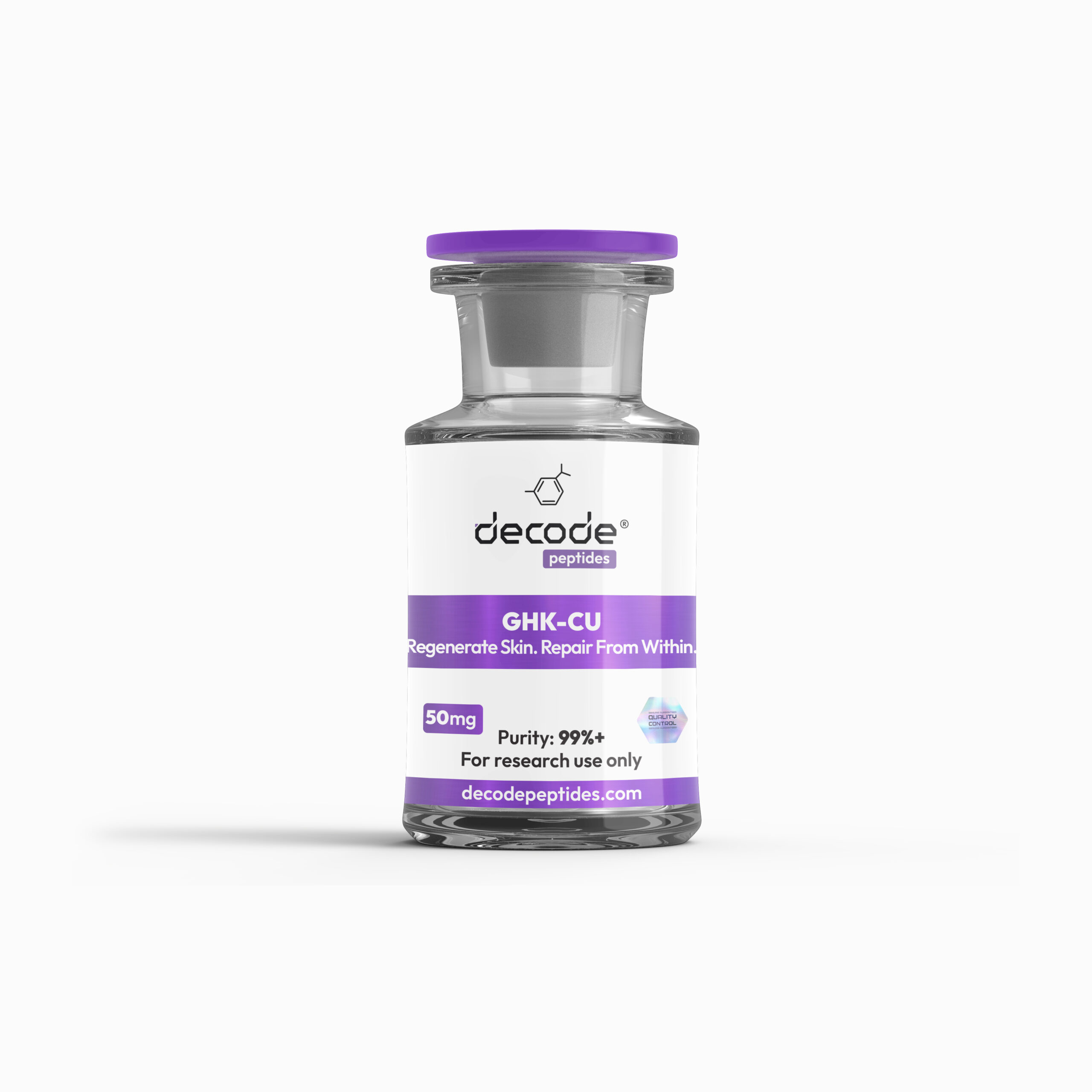
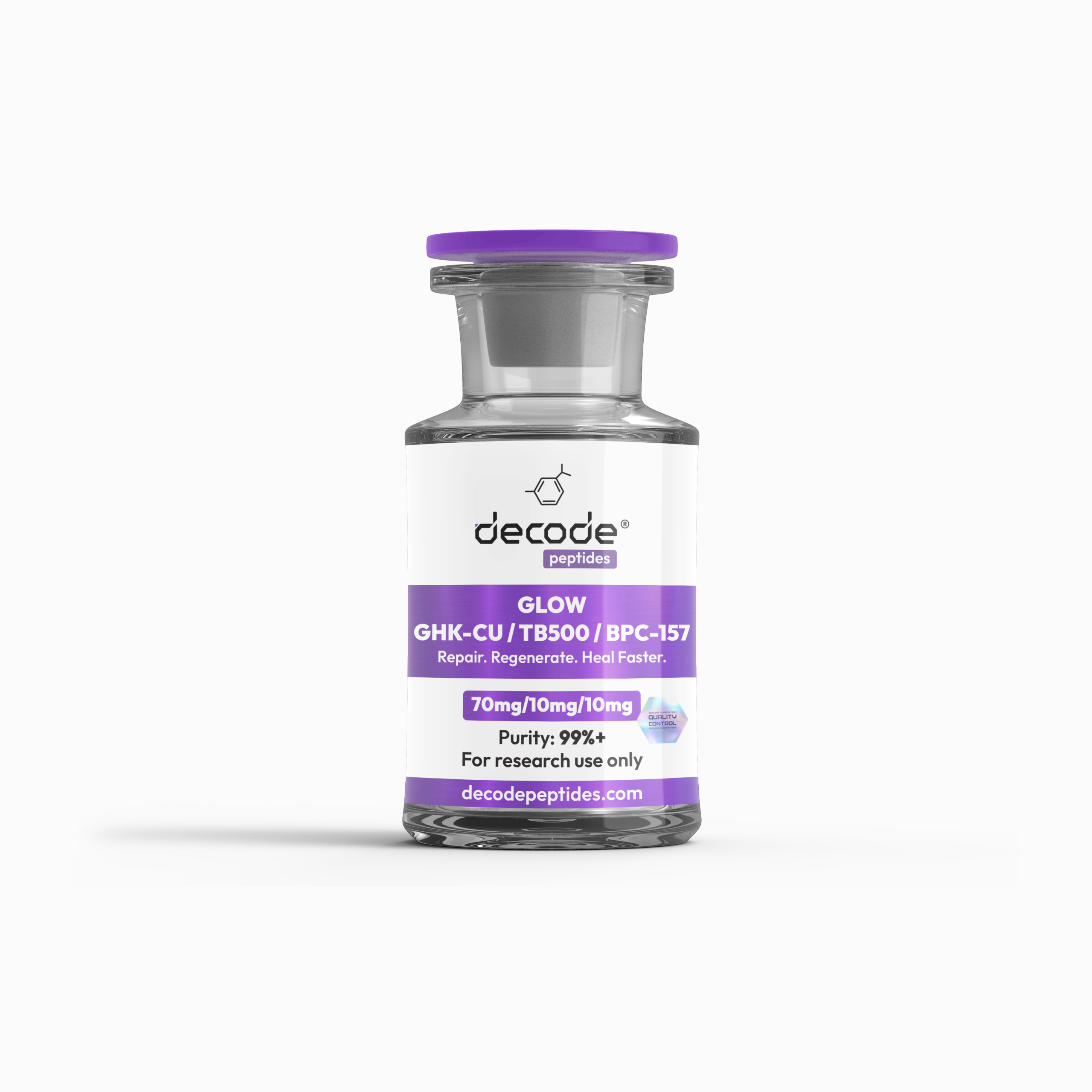
GHK-Cu (Glycyl-L-histidyl-L-lysine copper complex) is a naturally occurring copper-binding tripeptide found in human plasma. It is one of the most extensively studied peptides in regenerative biology, cosmetic dermatology, and wound healing research. Each vial contains 50mg of research-grade GHK-Cu as lyophilized powder.
Reconstitution requires bacteriostatic water (sold separately). Use the reconstitution calculator →
COA with every batch
Independent EU lab, ≥99% HPLC
Secure encrypted checkout
Card payments over TLS
Discreet packaging
Plain outer box, no branding
EU dispatch in 24–48h
Tracked delivery
Cold-chain handling
Temperature-controlled transit
About this compound
GHK-Cu (Glycine-Histidine-Lysine copper complex) was first isolated from human plasma albumin in 1973 by Pickart and Thaler. Its plasma concentration declines from ~200 ng/mL at age 20 to under 80 ng/mL by age 60 — a decline directly correlated with reduced tissue repair capacity. A landmark 2012 study demonstrated that GHK-Cu modulates the expression of 32% of the human genome, making it one of the most wide-ranging regulatory peptides ever characterised. Research applications span wound healing, skin regeneration, hair growth, pulmonary fibrosis, neural repair, and anti-cancer gene expression.

Research Data
Research Snapshot — GHK-Cu (Copper Peptide)
Key Mechanisms & Pathways
- Collagen I, III & VI SynthesisUpregulates COL1A1, COL3A1 and decorin — structural collagen genes critical for skin, tendon and wound repair.
- Genomic ReprogrammingModulates expression of 32% of the human genome via VEGF, HGF and anti-inflammatory cytokine gene activation.
- MMP / TIMP BalanceSimultaneously activates MMPs for remodelling and TIMPs for protection — balanced ECM turnover, not degradation.
- Copper-SOD ActivationDelivers Cu²⁺ to superoxide dismutase and lysyl oxidase, driving antioxidant defence and collagen crosslinking.
- VEGF & FGF-2 InductionStimulates angiogenic and fibroblast growth factors, accelerating wound vascularisation and closure.
- Neural RegenerationPromotes axonal outgrowth and BDNF expression; used in CNS injury and neuropathy research models.
Preclinical & Clinical Research Summary
| Research Area | Key Finding | Source |
|---|---|---|
| Skin Regeneration | Increased skin thickness by 120% and collagen density by 70% in aged skin models. | Abdulghani AA et al., 1998 — J Dermatol Surg |
| Wound Healing | Accelerated healing of chronic leg ulcers; improved wound contraction rates clinically. | Leyden JJ et al., 1990 |
| Hair Growth | Enlarged follicle size; increased KGF (keratinocyte growth factor) expression in vivo. | Uno H et al., 1996 |
| Lung Protection | Attenuated bleomycin-induced pulmonary fibrosis by reducing TGF-β1 and collagen deposition. | Campbell JD et al., 2019 |
References
- Pickart L et al. "The human tripeptide GHK-Cu in prevention of oxidative stress and degenerative conditions of aging." Oxid Med Cell Longev, 2012;2012:324832.
- Pickart L, Margolina A. "Regenerative and Protective Actions of the GHK-Cu Peptide in the Light of the New Gene Data." Int J Mol Sci, 2018;19(7):1987.
- Gorouhi F, Maibach HI. "Role of topical peptides in preventing or treating aged skin." Int J Cosmet Sci, 2009;31(5):327–345.
- Canapp SO et al. "The effect of topical tripeptide-copper complex on healing of ischemic open wounds." Vet Surg, 2003;32(6):515–523.
Specifications
- Sequence
- Gly-His-Lys (GHK) + Cu²⁺
- Molecular Weight
- 340.4 Da (free peptide)
- Amino Acids
- 3
- Half-Life
- Hours (SC/topical)
- CAS Number
- 89030-95-5
- Vial Size
- 50mg
- Purity
- ≥99% (HPLC)
- Form
- Lyophilized powder
- Reconstitution
- Bacteriostatic water (0.9% benzyl alcohol)
- Storage
- Sealed: 2–8 °C · Reconstituted: 2–8 °C, use within 28 days
Research library
Full mechanism breakdowns and peer-reviewed references for this compound.
Researcher reviews
Frequently asked questions
Related research compounds
For laboratory and in-vitro research use only. Not for human or veterinary use, not for consumption. By purchasing, you confirm you are a qualified researcher and accept full responsibility for compliant handling and disposal. Read the full disclaimers.