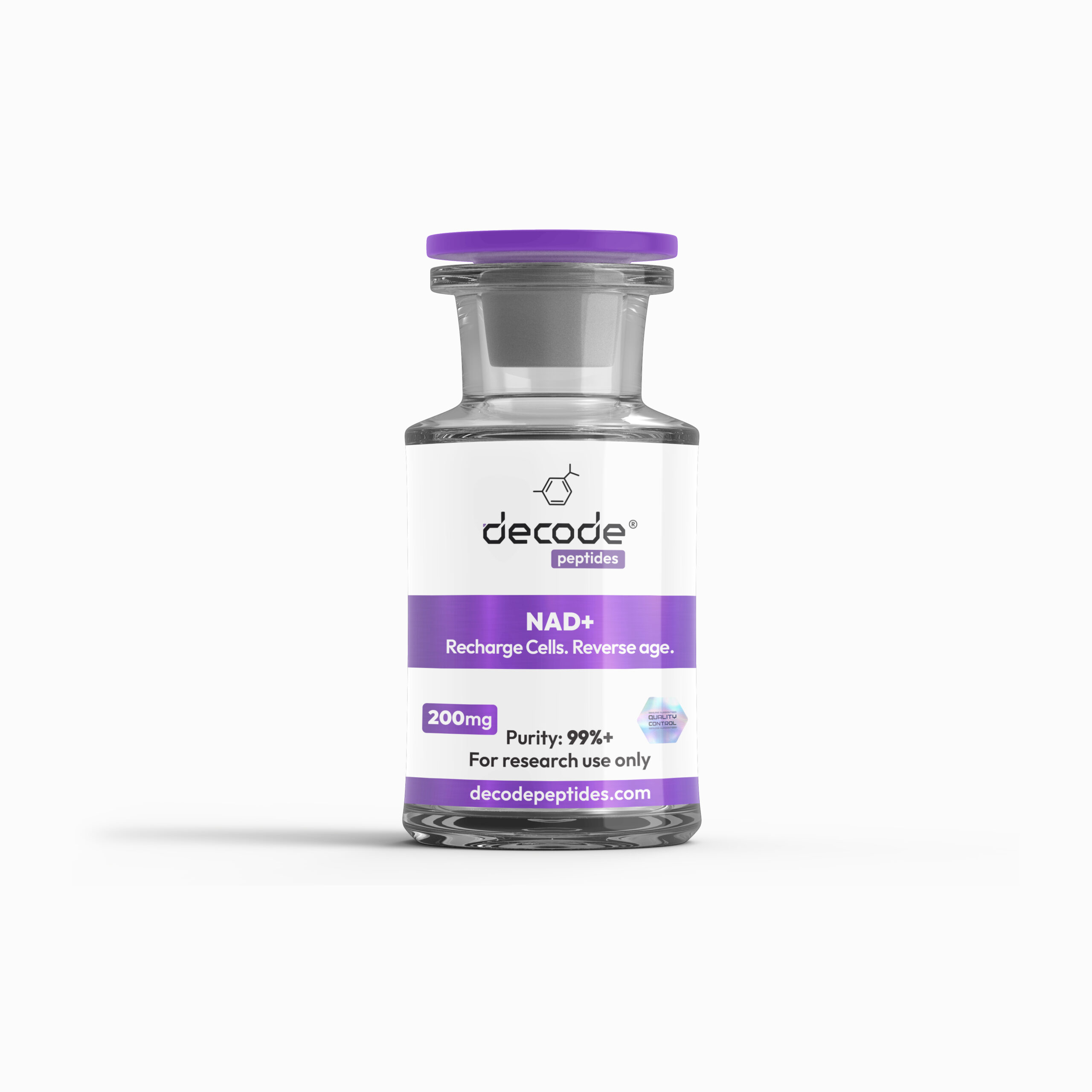
NAD+ (Nicotinamide Adenine Dinucleotide) is an essential coenzyme found in every living cell, serving as a fundamental electron carrier in cellular energy metabolism and a critical substrate for sirtuins, PARP enzymes, and CD38. NAD+ levels decline dramatically with age — by up to 50% between ages 40 and 60 — making it one of the most studied molecules in longevity and aging research. Each vial contains 100mg of pharmaceutical-grade NAD+.
Reconstitution requires bacteriostatic water (sold separately). Use the reconstitution calculator →
COA with every batch
Independent EU lab, ≥99% HPLC
Secure encrypted checkout
Card payments over TLS
Discreet packaging
Plain outer box, no branding
EU dispatch in 24–48h
Tracked delivery
Cold-chain handling
Temperature-controlled transit
About this compound
NAD+ (Nicotinamide Adenine Dinucleotide) is the central electron carrier of cellular metabolism and the obligate substrate for sirtuins (SIRT1–7), PARPs, and CD38 — three enzyme families that together regulate DNA repair, mitochondrial efficiency, circadian biology, inflammatory response, and metabolic homeostasis. NAD+ levels decline by approximately 50% between ages 40 and 60, a decline now considered one of the primary molecular drivers of biological aging. Direct NAD+ supplementation is the gold-standard research tool for studying sirtuin activation, mitochondrial rejuvenation, and DNA repair kinetics in aging models.

Research Data
Research Snapshot — NAD+
Key Mechanisms & Pathways
- Sirtuin Activation (SIRT1-7)All 7 sirtuins require NAD+ as obligate cofactor; SIRT1 activates PGC-1α (mitochondrial biogenesis), SIRT3 maintains ETC, SIRT6 preserves genomic stability.
- PARP-Mediated DNA RepairPARP1/2 consume NAD+ to repair up to 70,000 single-strand DNA breaks per cell per day via poly(ADP-ribose) synthesis.
- Complex I Electron TransportNADH (reduced NAD+) is the electron donor for Complex I — the rate-limiting step of mitochondrial ATP production.
- CD38 CompetitionCD38 NADase expression rises with age/inflammation (inflammaging); NAD+ repletion offsets this consumption and restores sirtuin activity.
- AMPK Cross-TalkVia SIRT1 → LKB1 → AMPK signalling, elevated NAD+ promotes repair and catabolic states — the metabolic signature of longevity.
- Circadian Clock RegulationSIRT1 deacetylates BMAL1 and PER2 — core clock proteins — linking NAD+ levels directly to circadian rhythm quality.
Preclinical & Clinical Research Summary
| Research Area | Key Finding | Source |
|---|---|---|
| Muscle Rejuvenation | Restored muscle mass, strength and mitochondrial density in aged mice to levels of young controls. | Gomes AP et al., 2013 — Cell |
| DNA Repair Restoration | Reversed γH2AX/8-OHdG DNA damage markers; improved radiation survival in aged mice. | Li J et al., 2017 — Science |
| Metabolic Health | NAD+ precursor NMN improved glucose tolerance, lipid metabolism and energy expenditure in obese mice. | Yoshino J et al., 2011 — Cell Metab |
| Human Clinical Trial | 250mg NMN/day for 10 weeks increased skeletal muscle NAD+ and improved insulin sensitivity in prediabetic women. | Yoshino M et al., 2021 — Science |
References
- Gomes AP et al. "Declining NAD+ induces a pseudohypoxic state disrupting nuclear-mitochondrial communication during aging." Cell, 2013;155(7):1624–1638.
- Yoshino J et al. "Nicotinamide mononucleotide, a key NAD+ intermediate, treats the pathophysiology of diet- and age-induced diabetes in mice." Cell Metab, 2011;14(4):528–536.
- Verdin E. "NAD+ in aging, metabolism, and neurodegeneration." Science, 2015;350(6265):1208–1213.
- Yoshino M et al. "Nicotinamide mononucleotide increases muscle insulin sensitivity in prediabetic women." Science, 2021;372(6547):1224–1229.
Specifications
- Sequence
- Dinucleotide coenzyme
- Molecular Weight
- 663.4 Da
- Half-Life
- Minutes (direct administration)
- CAS Number
- 53-84-9
- Vial Size
- 200mg
- Purity
- ≥99% (HPLC)
- Form
- Lyophilized powder
- Reconstitution
- Bacteriostatic water (0.9% benzyl alcohol)
- Storage
- Sealed: 2–8 °C · Reconstituted: 2–8 °C, use within 28 days
Research library
Full mechanism breakdowns and peer-reviewed references for this compound.
Researcher reviews
Frequently asked questions
Related research compounds
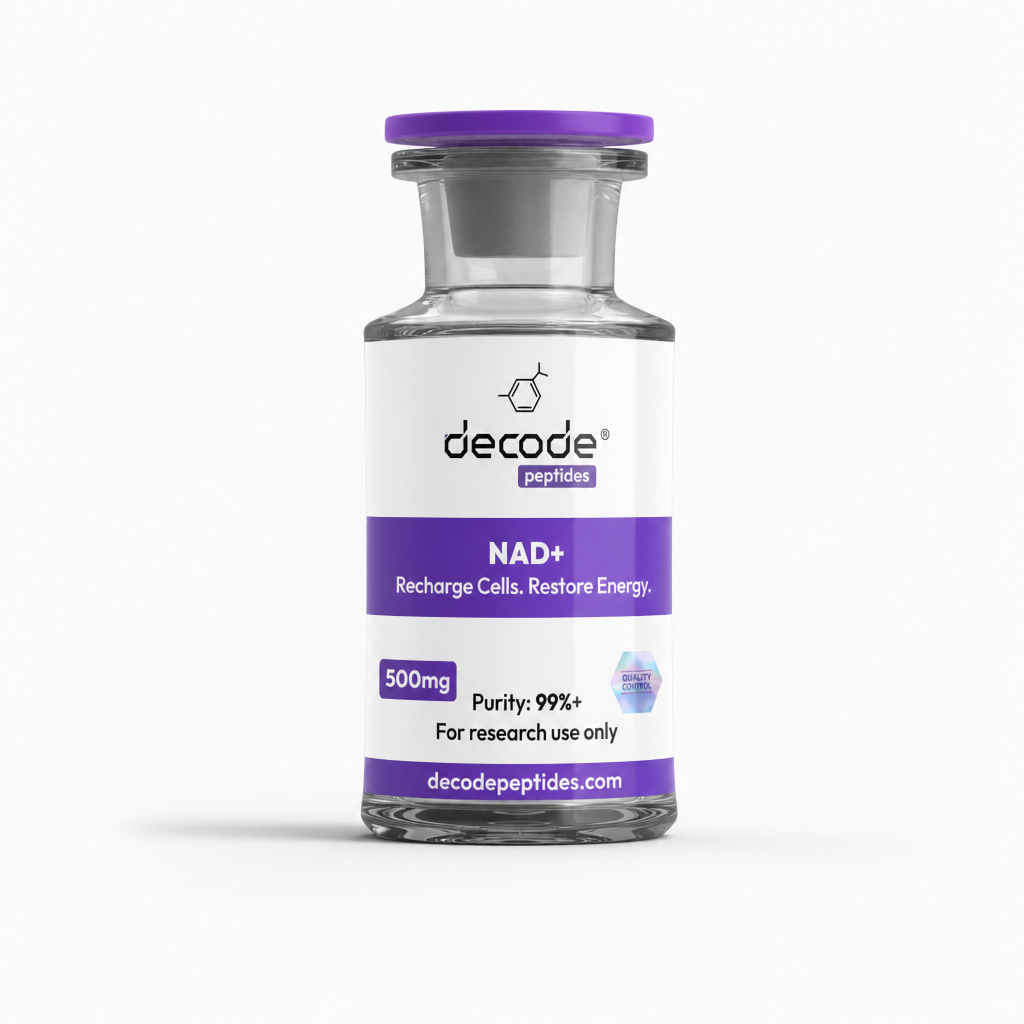
For laboratory and in-vitro research use only. Not for human or veterinary use, not for consumption. By purchasing, you confirm you are a qualified researcher and accept full responsibility for compliant handling and disposal. Read the full disclaimers.